
Who Reviews the Order an AI Agent Builds?
The buyer's approver signs it, then someone on your team accepts it. What that reviewer can see decides how long a chemical order waits.
When your buyers' AI agents start building their orders, none of those orders ships until someone on your team says yes.
A chemical supplier that has decided who gives that yes, and what they see when they give it, can accept the routine orders quickly and still give the unusual ones a proper look.
Forrester and Everest Group, October 2026
Agents will finish the routine buys and stop short on the rest.
In chemicals, the routine buy is a repeat order of a familiar grade at the agreed price, shipped to a known site.
A new grade, a substitute, a new delivery site, or a spot price takes an order out of the routine, and we'd expect those orders to reach you already signed.
Forrester published its predictions for 2027 on October 28, and the first is about agents.
“Agentic buying will play a role in 75% of B2B purchases.”
AI agents will do much of that buying, Vasudevan wrote, "often stopping just short of completing the transaction." Forrester sees fully autonomous purchasing staying "concentrated in high-volume, low-risk, repeatable scenarios."
Before anyone signs, the buyer will call your people.
Expect questions for your technical team about whether a substitute will run on the buyer's line, and for your account manager about lead time and who carries the risk if a delivery slips.
Forrester predicts buyers will double their human interactions to validate what their AI recommends, and that product experts will matter more.
“AI can identify and compare providers quickly, but it cannot fully determine organizational fit, feasibility, accountability, or acceptable risk.”
A signed order still needs a yes from your side.
Once the buyer's approver signs, the order comes to you, and the last yes is yours.
Someone on your team checks it against the account, then accepts it or sends it back.
An order that breaks the account's pattern counts as an exception, and exceptions still go to people.
Everest Group surveyed more than 200 U.S.-focused senior decision-makers in transportation, logistics, and other supply chain-intensive industries. Decision-making is primarily human-led at 72% of their organizations, and exception handling at 60%.
The buyer's agent and your reviewer read different records.
Your reviewer needs what you don't publish, like the account's past orders, the prices you agreed, the grade that passed their spec, and the notes from the last call.
When they're spread across inboxes and spreadsheets, the order waits.
The buyer's agent reads what you do publish. Forrester tells providers to make product, pricing, compliance, and performance information "accurate, structured, and accessible to buyer agents."
Decide 4 things before the first agent-built order arrives.
- 69%have moved beyond isolated AI use cases
- 26%have formal structures for AI accountability
- 19%have significantly or extensively redesigned workflows for people and AI
AI use is well ahead of the decisions about who answers for it and how the work should change.
Share of organizations in an Everest Group survey of more than 200 U.S.-focused supply chain decision-makers, October 2026
Who accepts it. A named reviewer for each account or product line.
Where it waits. One place where every pending order shows its age and its owner.
What the reviewer sees. The account's history next to the order, so nobody goes looking for it.
Who answers the buyer's questions. A named technical or commercial contact for when the buyer checks what their AI recommended.
Neither source looked at chemicals alone.
Forrester's 75% is a prediction for 2027 across B2B purchases of every kind, and Everest Group surveyed transportation, logistics, and other supply chain businesses.
Nobody has published a count of the chemical orders AI agents build today (that we could find).
What holds either way is the last stop on the route, because a supplier answers for what it ships.
 Vailent modulePipeline
The last yes needs one place to happen.
In Vailent's Pipeline module, sales orders go to an approval Inbox where a manager sees the whole team's pending orders in one queue, with revisions marked and a filter by account manager.
A general AI model knows what's public. We built Vailent to bring your own record of the account into that review, and your team makes the call.
The order that breaks an account's pattern is the one your reviewer should see first.
Sources.
- Predictions 2027: AI Takes Over Business Buying, But Humans Retain Control Barry Vasudevan, Forrester.Published Oct 28, 2026 · Checked Nov 5, 2026
- Lean Solutions Group and Everest Group Study Reveals Significant Gap Between AI Adoption and Business Transformation Everest Group research, released by Lean Solutions Group.Published Oct 26, 2026 · Checked Nov 5, 2026

See what AI-native operations look like
Vailent embeds AI into the daily work of chemical and polymer distributors and producers: quoting, onboarding, inventory, and daily intelligence.
Book a DemoKeep reading
What a Chemical Credit Application Should Ask
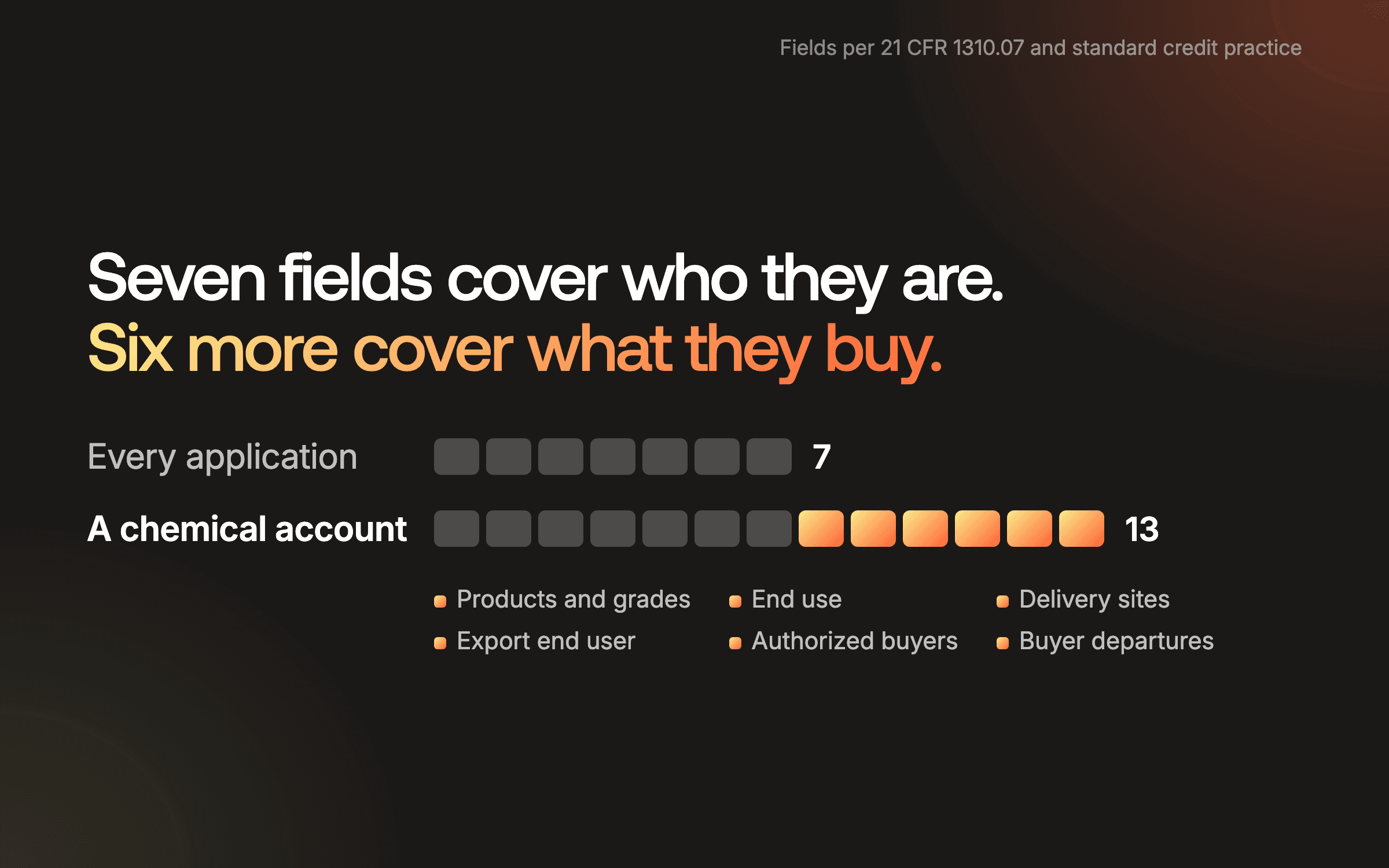
A standard credit application tells you who the client is. A chemical account also has to tell you what they're buying, what it's for, and who can order it.
TSCA PFAS Reporting Deadline Falls in 2027 for Chemical Importers
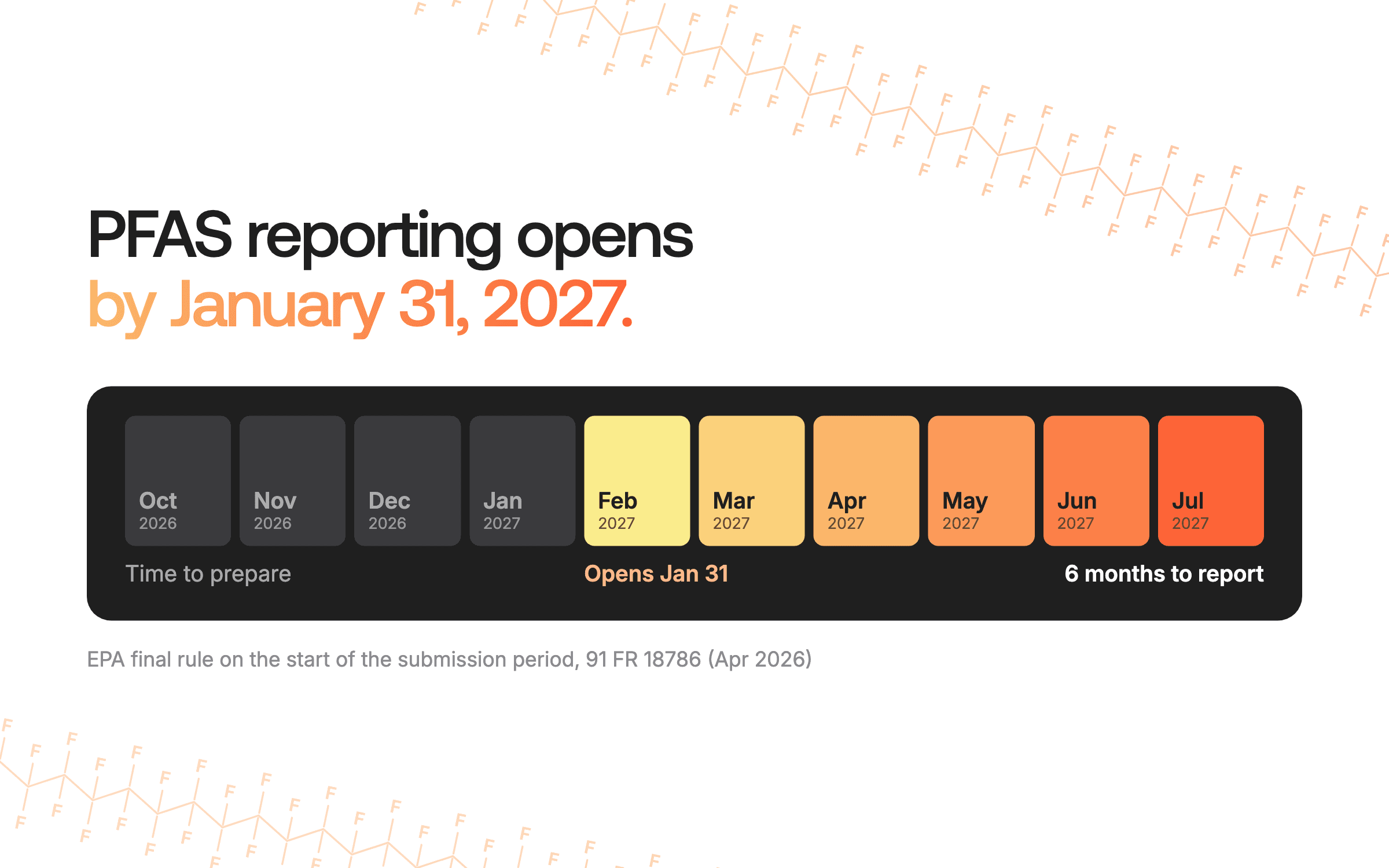
The window opens by January 31, 2027 and runs 6 months. EPA hasn't finished the rule that decides who reports, so the look-back to 2011 is due either way.
Chemical Quote Automation Needs Prices That Hold
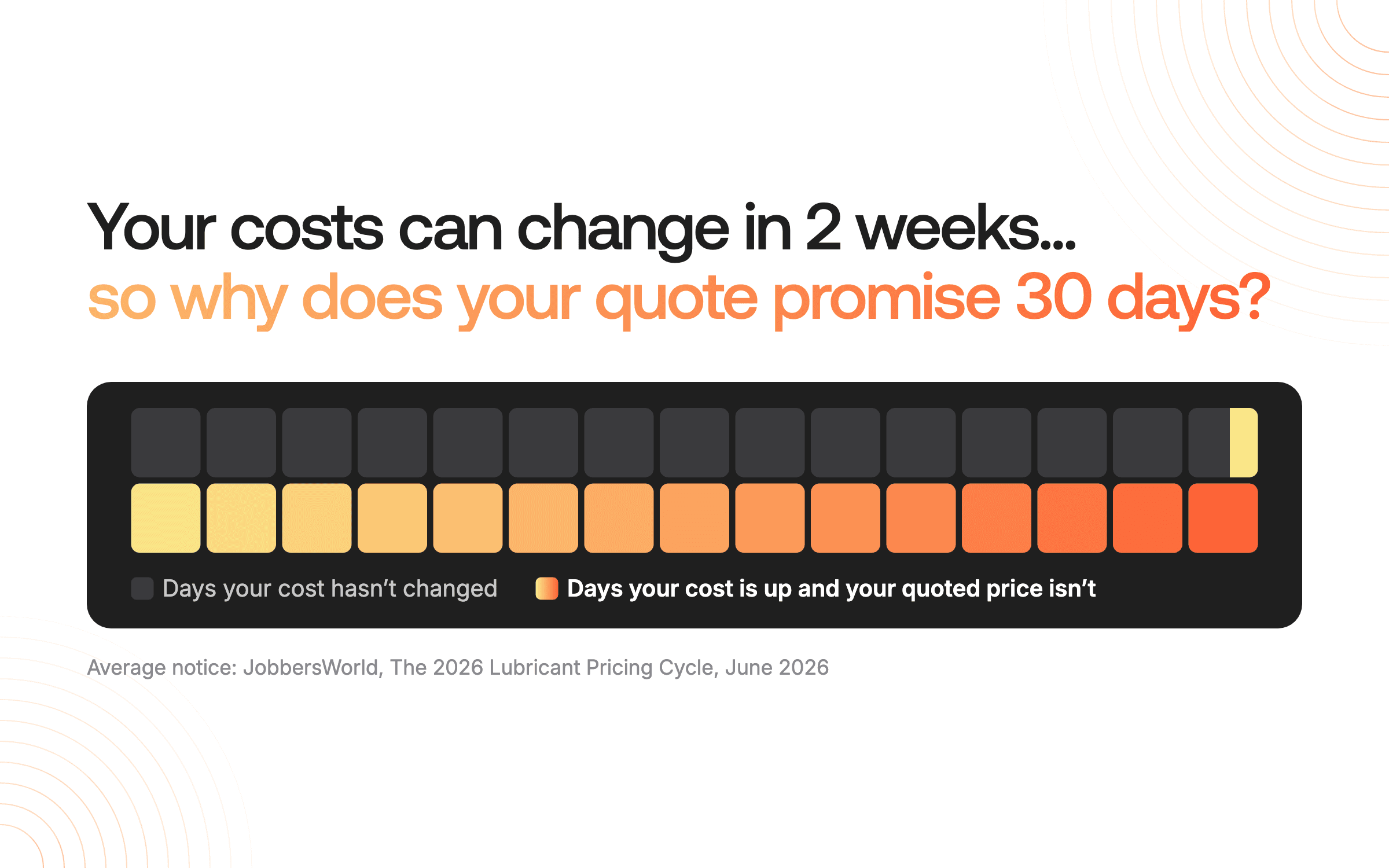
What quote automation should check before a chemical quote goes out, so the margin you quote is the margin you keep when a supplier's next increase lands.