
Chemical Inventory Reconciliation Starts With the Lot
A product total can match while the wrong lot ships. Here's how to reconcile chemical stock lot by lot, with the check that proves each step.
Chemical inventory reconciliation works when you compare your ERP with the floor lot by lot, in the unit you book in, and name the cause of every difference on the day it opens.
Do that and month end stops being the day finance finds the gap. A product total can match to the kilogram while 2 of its lots are 400 kg off.
Inventory reconciliation means comparing what your books say you hold with a physical count, then resolving every difference.
There's more stock to keep straight, too. The U.S. Census Bureau's Monthly Wholesale Trade Survey puts chemical merchant wholesalers' inventory at $17.4 billion at the end of September 2026, a preliminary estimate.
That's up 9.1% on a year earlier, and it rose in each of the last 8 months.
- Sep 2025: $15.9B
- Oct 2025: $16.0B
- Nov 2025: $15.7B
- Dec 2025: $15.8B
- Jan 2026: $15.7B
- Feb 2026: $15.8B
- Mar 2026: $16.4B
- Apr 2026: $16.4B
- May 2026: $16.8B
- Jun 2026: $17.0B
- Jul 2026: $17.1B
- Aug 2026: $17.2B
- Sep 2026: $17.4BPreliminary
Inventories of U.S. chemical merchant wholesalers (NAICS 4246), in billions of dollars. September 2026 is preliminary, and Census finds no seasonal pattern in this line, so its adjusted and unadjusted figures are the same.
U.S. Census Bureau, Monthly Wholesale Trade, September 2026 report, released November 9, 2026 (Table 1b).
How to reconcile chemical inventory in 5 steps, with a check for each.
Count every lot on its own line.
Take a product with 6 lots and count each one beside its book quantity. Add the lines up only at the end, because a product total nets a short lot against a long one.
Lots that move every day get reconciled daily, and slow-moving lots go into a cycle count.
| Lot | Book (kg) | Counted (kg) | Difference (kg) |
|---|---|---|---|
| T-2601 | 4,000 | 4,000 | 0 |
| T-2604 | 3,000 | 3,400 | +400 |
| T-2607 | 3,500 | 3,500 | 0 |
| T-2609 | 3,000 | 2,600 | -400 |
| T-2612 | 3,500 | 3,500 | 0 |
| T-2615 | 3,000 | 3,000 | 0 |
| Total | 20,000 | 20,000 | 0 |
An order booked out of lot T-2604 was picked from lot T-2609, so both lots are 400 kg wrong.
The check. Every lot has a book quantity, a count, and a difference, and the product total is their sum.
Compare in the unit you book in.
A tank read in liters and a book kept in kilograms disagree whenever the temperature moves. By NIST's density data, the same 20,000 kg of toluene fills 22,827 liters at 10 °C and 23,322 liters at 30 °C.
That's 495 liters apart with nothing lost. Convert the reading to kilograms at the temperature you measured before anyone calls it a gap.
- 0 °C22,588 L
- 5 °C22,707 L
- 10 °C22,827 L
- 15 °C22,948 L
- 20 °C23,071 L
- 25 °C23,195 L
- 30 °C23,322 L
- 35 °C23,450 L
- 40 °C23,579 L
NIST Chemistry WebBook (SRD 69), isobaric properties of toluene at 1 atm. Liters are the mass divided by NIST's density.
The check. No difference gets a cause until both numbers are in the same unit, at a stated temperature.
Give held stock its own state.
Stock on quality hold, in quarantine, or waiting on a return inspection is on hand but not free to promise. Keep it in its own state so the count can't read it as available.
The check. For each lot, on hand equals available plus held plus allocated.
Name the cause the day the gap opens.
A gap that waits for month end loses the people who remember it. Check these causes first:
- A receipt booked to the wrong lot number
- A pick from a different lot than the one allocated
- A liter reading compared with a kilogram book
- Samples, spills, or drum heels nobody booked
- A transfer booked out of one site and not into the other
The check. Every open difference has a cause and an owner by the next morning.
Keep the daily record you report from.
The Tier II report is due by March 1. For each hazardous chemical a facility reports, it asks for an estimate, in ranges, of the most on hand on any single day last year and of the average daily amount.
Ranges forgive a small miscount. Finding last year's peak day still takes a record kept day by day.
The check. You can pull last year's peak day for each reported chemical from the record, without a recount.
What a lot-level count won't tell you.
It shows where the book and the floor disagree, not which one is right. A bad count is still bad at lot level, so a gap with no cause gets a recount before anyone adjusts the book. When the cause is found, adjust the book and record the reason against the lot.
 Vailent moduleInventory
Inventory puts every gap on the record the day it opens.
Inventory sets what your ERP believes beside what really moved, and shows the gap between them to 3 decimals, with quantities in metric tons. Every difference is named by its cause, against the lot it actually happened to.
Each lot you receive is traced from the supplier's receipt to the day it ships, at its own actual cost, and each order is matched to the lot that will ship against it, by the rule you set.
The day a lot comes back 400 kg short is the day its cause is easiest to find.
Sources.
- Monthly Wholesale Trade Report, September 2026 U.S. Census Bureau.Published Nov 9, 2026 · Checked Nov 25, 2026
- Isobaric Properties for Toluene NIST Chemistry WebBook (SRD 69), equation of state by Lemmon and Span, 2006.Checked Nov 25, 2026
- 40 CFR Part 370 Electronic Code of Federal Regulations, up to date as of November 23, 2026.Checked Nov 25, 2026

See what AI-native operations look like
Vailent embeds AI into the daily work of chemical and polymer distributors and producers: quoting, onboarding, inventory, and daily intelligence.
Book a DemoKeep reading
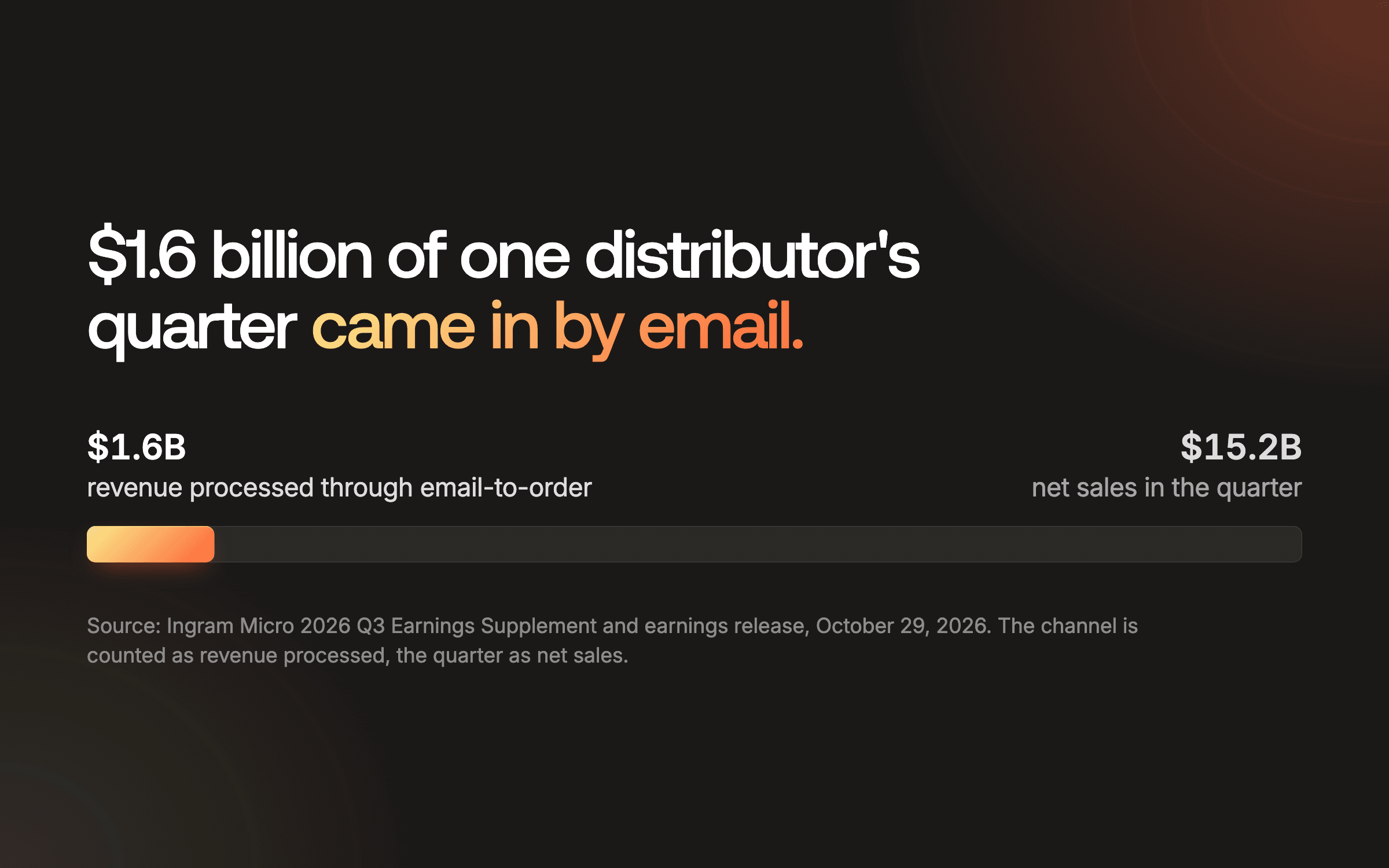
Email Orders Are Already a Chemical Sales Channel
A technology distributor's results show how big email ordering can get. Here's what the same channel looks like in a chemical inbox, and how to size yours.
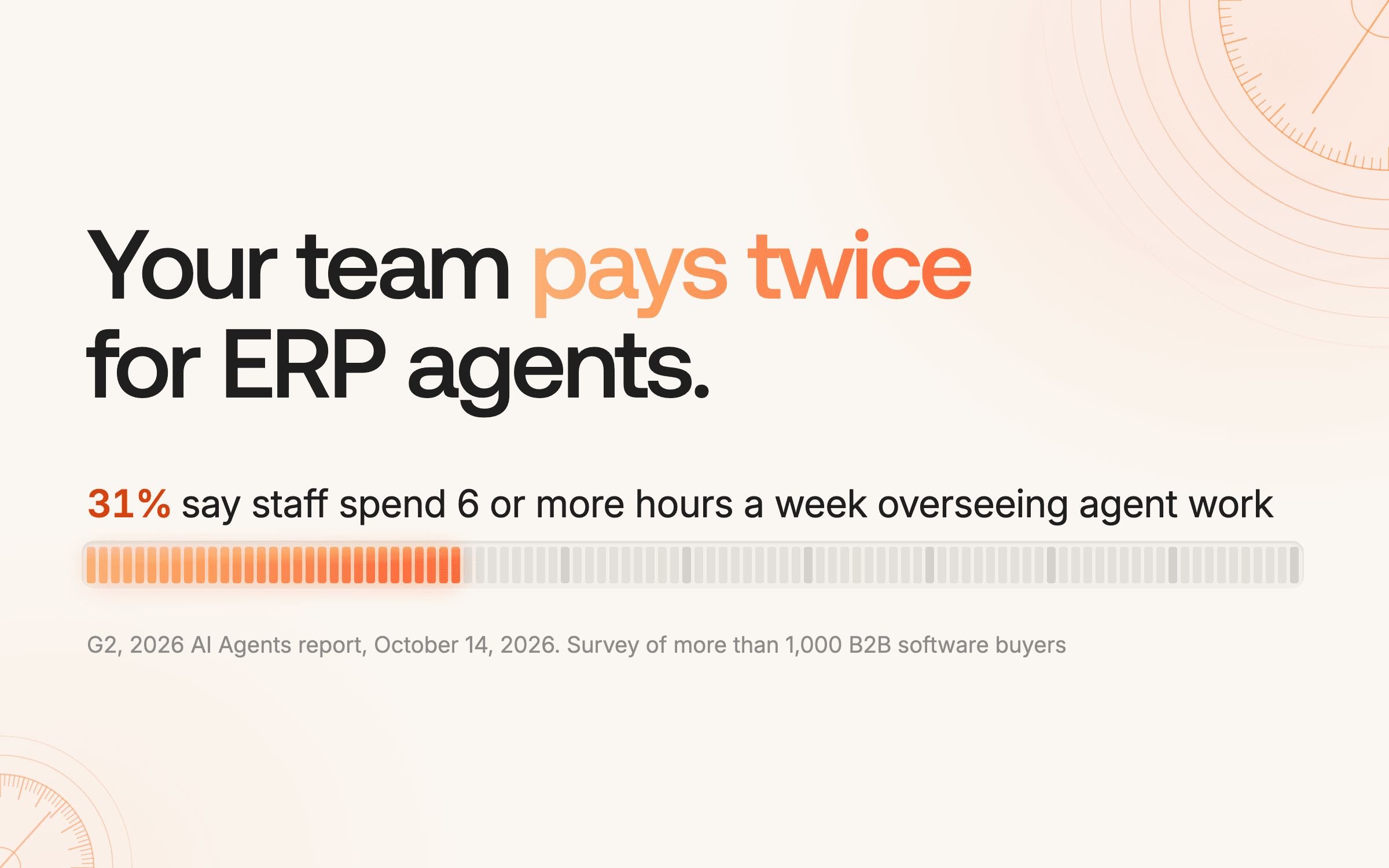
AI for ERP Now Means Paying Twice
Agents are becoming standard in ERP. Two leading vendors bill theirs on top of the license, and the hours spent checking them never reach the invoice.
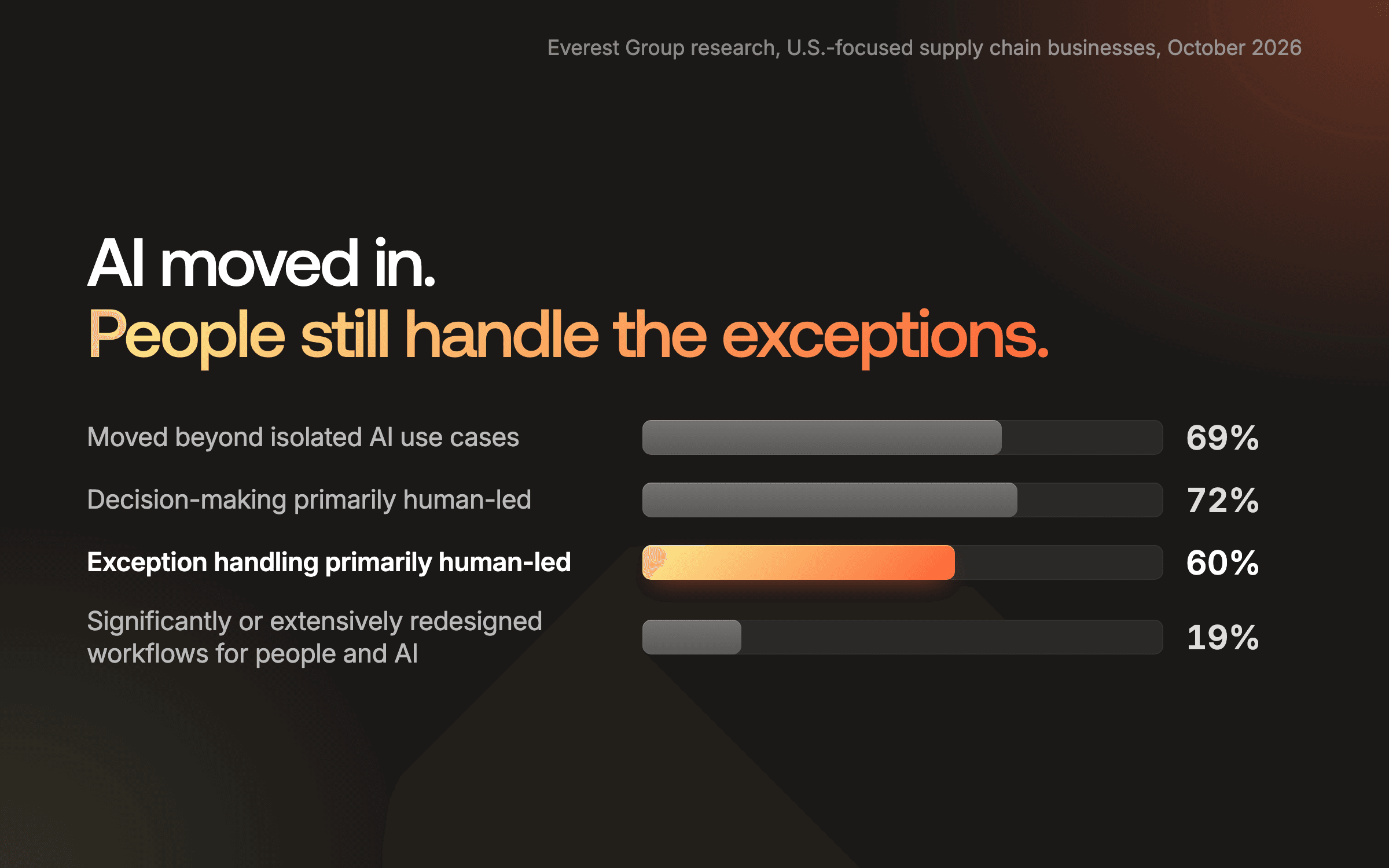
Who Reviews the Order an AI Agent Builds?
The buyer's approver signs it, then someone on your team accepts it. What that reviewer can see decides how long a chemical order waits.